


If your income stopped tomorrow… what would happen next?
Income protection keeps money coming in
If you can’t work due to illness or injury, income protection steps in - so your life doesn’t stop with your income.
For many people, there’s no real safety net.
Sick pay might last a few weeks… or not exist at all.
Savings can disappear quicker than expected.
And financial pressure builds fast.
Income protection is designed for exactly this moment.
Once your chosen waiting period has passed, it pays you a monthly income - giving you the stability to cover your bills, protect your lifestyle, and focus on getting back on your feet.
Whether you’re employed, self-employed, or running your own business, your income is the engine behind everything.
But for most people, it’s also the least protected.
Independent, FCA-authorised advisers | Trusted by families across the UK.
Most people insure their life… but not their income

You insure your home.
You insure your car.
You might even insure your phone.
But the one thing that pays for all of it - your income - is often left exposed.
For many people, especially business owners and company directors:
There’s no long-term sick pay
Income can fluctuate
Financial commitments don’t stop
So if illness or injury takes you out of work, even temporarily, the impact can be immediate.
Bills still come in.
Mortgages still need paid.
Your lifestyle doesn’t pause.
And without a plan, savings and investments can quickly start to disappear.
What is income protection insurance?
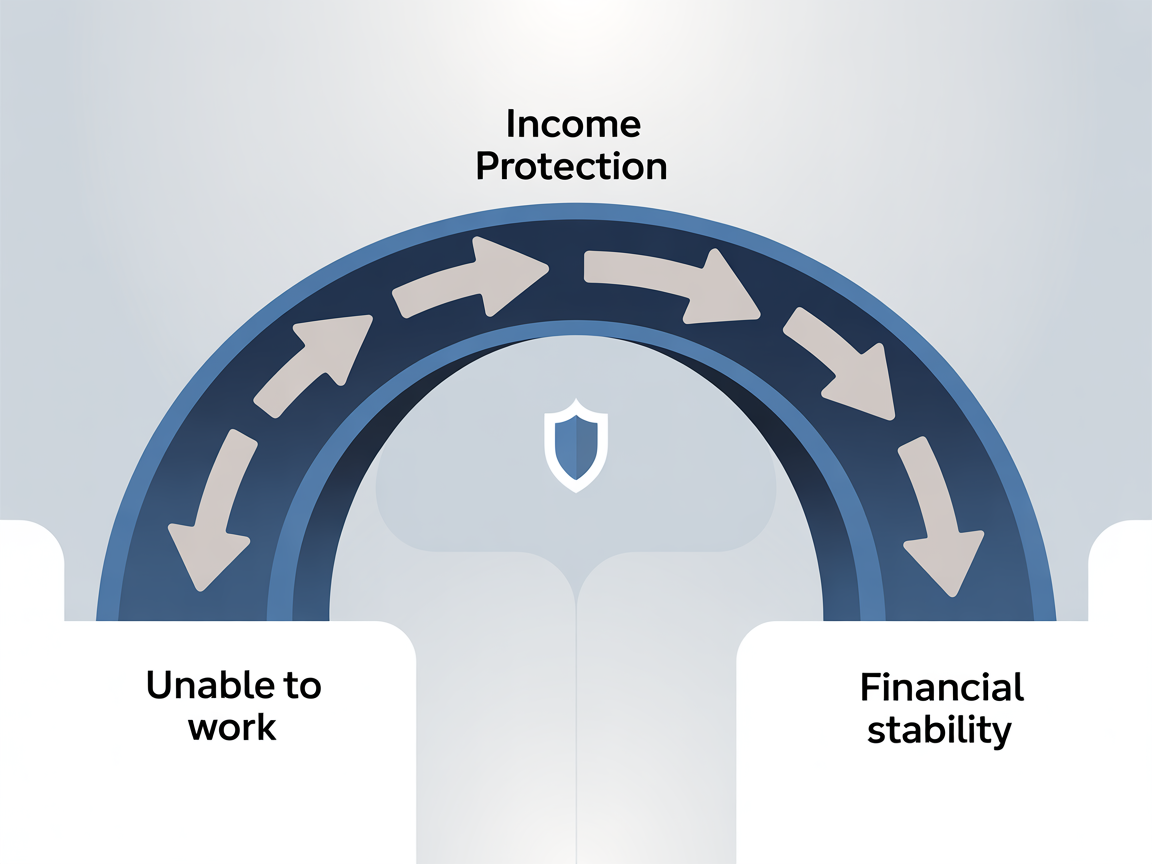
Income protection insurance pays you a regular monthly income if you’re unable to work due to illness or injury.
Instead of a one-off payout, it provides ongoing support - helping you cover your essential costs while you recover.
It can:
Replace a portion of your income (typically up to 60%)
Pay out until you return to work, retire, or the policy ends
Cover a wide range of conditions, including physical and mental health
It’s not about replacing everything.
It’s about giving you breathing space when you need it most.
How it works (simple terms)
You choose how much of your income to protect
You set a waiting period (e.g. 4, 8, 13 weeks)
If you can’t work, the policy pays a monthly income after that period
Payments continue until you recover or reach the policy end

Life doesn’t stop when your income does
so your plan shouldn’t either
It’s not just about income. It’s about protecting your life
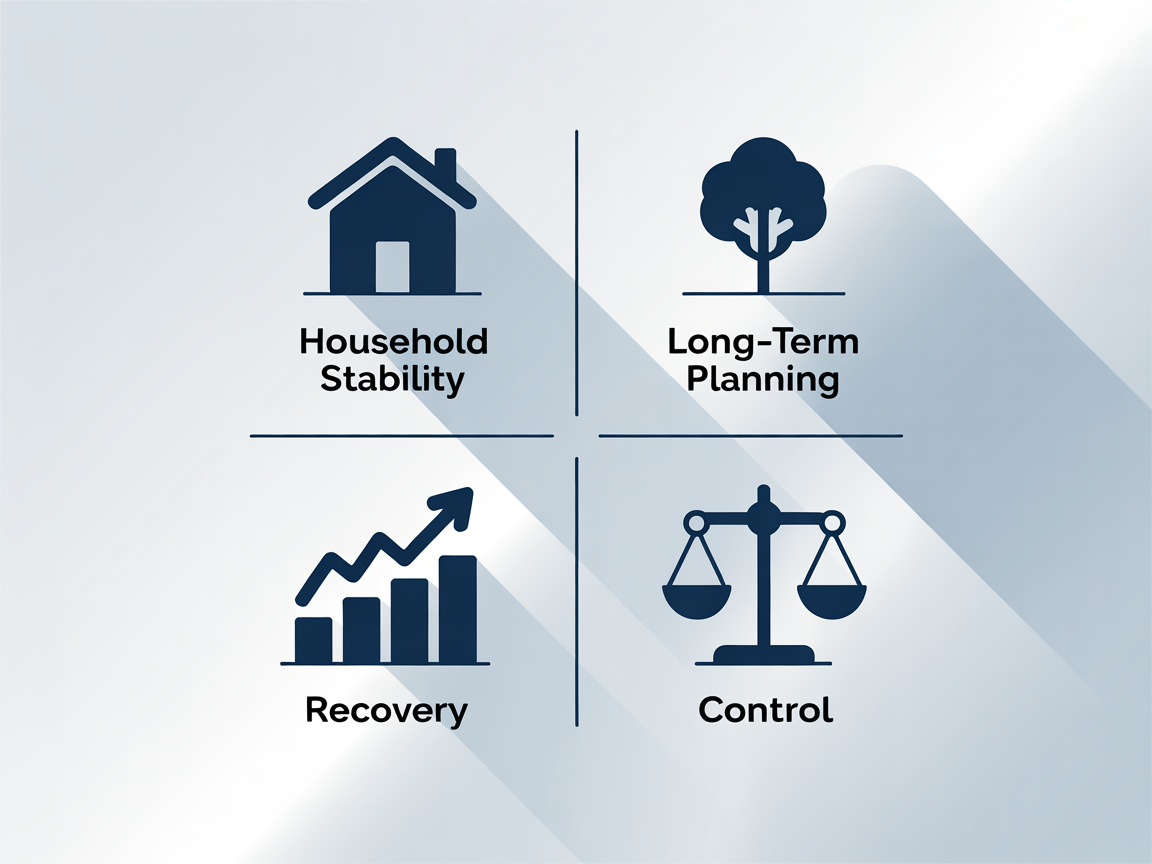
Income protection helps you:
-
When your income stops, your outgoings don’t.
Your mortgage or rent is still due.
Bills still come in.
Food, childcare, travel - life continues as normal.Without a replacement income, the pressure builds quickly.
What starts as a short-term issue can turn into a longer-term financial strain.Income protection helps keep things steady.
By providing a regular monthly income, it allows you to continue covering your essential costs - so your household can keep running without disruption while you recover.
-
Most people have a plan - even if it’s not written down.
Building savings.
Investing for the future.
Paying into pensions.
Working towards financial independence.But when income stops, those plans are often the first thing to be sacrificed.
Savings get used.
Investments get paused.
Pensions contributions stop.And over time, that can have a much bigger impact than people expect.
Income protection helps protect the bigger picture.
Instead of unravelling everything you’ve built, it gives you the ability to stay on track - even when life doesn’t go to plan.
-
One of the biggest hidden pressures during illness or injury isn’t just physical - it’s financial.
Questions start to creep in:
“How long can we manage this?”
“When do I need to get back to work?”
“What if this takes longer than expected?”
That pressure can lead people to return to work too early, or push through when they shouldn’t.
Income protection removes that pressure.
With a regular income coming in, you can focus on what actually matters - getting better, properly.
No rushing.
No cutting corners.
No unnecessary stress. -
When income stops unexpectedly, it can feel like everything else starts to slip.
Decisions become reactive instead of planned.
Short-term fixes replace long-term thinking.
Control starts to disappear.Income protection helps you stay in control of your situation.
It gives you options:
Time to make clear decisions
Flexibility in how you manage your finances
Stability during uncertain periods
Instead of feeling like things are happening to you, you stay in a position where you can make calm, considered choices.
Who is income protection for?

Built for real lives - not just textbook scenarios
Business owners
You’ve built something valuable.
But without you, income can stop quickly.
Company directors
Salary + dividends can create gaps in traditional protection.
Self-employed professionals
No sick pay. No safety net. Everything relies on you.
Employed individuals
Even with sick pay, many schemes only last a few months.
👉 This is where proper planning makes the difference.
Most people don’t need more products - they need a plan?
Income protection isn’t just about replacing income.
It’s about protecting the life you’re building.
If you’re not sure what would happen if your income stopped, now is the time to find out.
Income protection vs other cover
It’s common to have questions around this.
Life Insurance → Pays out if you pass away
Critical Illness Cover → Pays a lump sum for specific illnesses
Income Protection → Pays ongoing income if you can’t work
Each has a role.
But income protection is often the one that gets overlooked - despite being the most likely to be used.
FAQs: Income Protection
-
For many people, yes - especially if your lifestyle depends on your ability to earn.
The real question isn’t “Is it worth it?”
It’s:“What would happen financially if my income stopped?”
If the answer is:
You’d struggle to cover bills
You’d need to use savings quickly
Or you’d feel pressure to return to work too soon
…then income protection can be extremely valuable.
Why people choose it:
Provides a regular monthly income if you can’t work
Reduces reliance on savings or credit
Gives you time and breathing space to recover
For business owners and self-employed individuals, it’s often even more important - as there’s usually no safety net in place.
-
This depends on your personal situation, but most policies allow you to cover:
Up to around 60% of your income
The right level of cover should reflect:
Your monthly outgoings (mortgage, rent, bills)
Your lifestyle costs
Any existing safety nets (e.g. savings or sick pay)
A simple way to think about it:
You don’t need to replace everything - just enough to keep life running comfortably.We typically help clients find the balance between:
Adequate protection
And keeping premiums sensible
-
Income protection doesn’t usually pay immediately.
Instead, you choose a waiting period (also called a deferred period), such as:
4 weeks
8 weeks
13 weeks
Or longer
The policy starts paying after this period has passed
Why this matters:
A longer waiting period → lower monthly cost
A shorter waiting period → faster payout
Many people align this with:
Employer sick pay
Or how long their savings would last
This creates a smooth transition - so there’s no sudden drop in income.
-
This depends on how the policy is set up.
There are generally two options:
Short-term policies
Pay out for a fixed period (e.g. 1-2 years)
Lower cost
Designed for temporary situations
Long-term policies
Pay until:
You return to work
Or reach retirement age
This is typically the most comprehensive option
The right choice depends on:
Your budget
Your level of financial resilience
How much long-term protection you want in place
-
Income protection covers a wide range of situations where you’re unable to work due to illness or injury.
This can include:
Physical injuries (e.g. back problems, accidents)
Illness (short or long-term conditions)
Surgery recovery
Mental health conditions (in many modern policies)
It’s not limited to “serious illness” only
That’s a key difference from critical illness cover.
As long as the condition prevents you from doing your job (based on policy terms), you may be able to claim.
-
Yes - this is one of the key strengths of income protection.
Unlike some other types of cover:
You can claim multiple times throughout the life of the policy
For example:
You claim → recover → return to work
Then later need to claim again
The policy can continue to support you.
Some policies also include:
“Linked claims” periods (short gaps treated as one claim)
Faster access if the same condition returns
-
In many cases, yes.
Most modern income protection policies include cover for:
Stress
Anxiety
Depression
These are actually among the most common reasons people claim.
However:
Cover depends on the insurer and policy terms
Some exclusions or underwriting may apply
This is why advice matters - making sure the policy reflects your situation properly.
-
In most cases:
Payouts are tax-free
This is because:
Policies are typically paid from your personal (after-tax) income
However, there are exceptions - particularly for:
Employer-paid policies
Certain business structures
We always ensure this is structured correctly from the outset, so there are no surprises later.
-
This is an important distinction.
Short-term income protection:
Covers you for a limited period (e.g. 12–24 months)
Lower cost
Suitable if you have other long-term safety nets
Long-term income protection:
Covers you until retirement if needed
More comprehensive
Designed to protect your full earning potential
Think of it as temporary cover vs full protection
For many professionals and business owners, long-term cover is often the more appropriate solution - but it depends on your wider plan.
-
This is an important one - because recovery isn’t always “all or nothing”.
Many people don’t go straight from being unable to work… back to full-time work overnight.
That’s where income protection can be really valuable.
Some policies include “proportionate” or “rehabilitation” benefits
This means:
If you return to work on reduced hours or lower income
The policy can continue to pay a partial income to top you up
For example:
You return to work part-time
Your income drops by 40%
The policy may cover some of that shortfall
This helps you:
Ease back into work gradually
Avoid rushing your recovery
Maintain financial stability during the transition

More Info : Internal Link Suggestions
Life Insurance – protecting the people you love most
Critical Illness Cover – protection for when life takes and unexpected turn
Self-employed mortgages – your income is unique your mortgage should be too.
Remortgages – port or switch, we’ll help you decide
Financial Insights - guidance to protect, plan and grow your wealth.
More Info : External Link Suggestions
Money Helper - What is income protection?
FCA - Protecting consumers
NHS - Mental health info & support
Office for National Statistics - UK statistics
Which? - Income protection, is it worth it?
FCA Register - Turkington Davis
Income protection policies are subject to underwriting, terms, conditions, and exclusions.
The level of cover and eligibility will depend on your personal circumstances.
Protection plans are subject to terms and conditions. The availability and cost of cover depend on individual circumstances.